
Shop Moong Yellow Dal Online
An 800g pack delivered from a local store — which moong is which, why this one needs no soaking, and the proportions for khichdi.

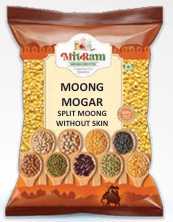
MOONG YELLOW DAL 800GM
$3.88
roughly 15 servings
Sold by Easy Grocery
Where to Buy It
This pack is listed by Easy Grocery on DoorToShop, alongside the rest of their range — other dals and pulses, atta and rice, whole and ground spices, ghee and cooking oils. Our guide to the store covers what else they stock, and the wider Groceries category has other local stores you can add to the same order.
Delivery is free on orders above $69, and there is no minimum order value. Enter your postcode at checkout to confirm delivery coverage for your address, or read how DoorToShop works.
Frequently Asked Questions: Moong Dal
What is yellow moong dal?
Mung beans that have been skinned and split, so what is left is a uniform pale yellow with no green. It is the most processed of the three forms moong is sold in, and the quickest to cook because there is no skin to soften.
What is the difference between yellow moong, chilka moong and whole moong?
How much of the bean is left. Whole green moong — sabut moong — is the unsplit bean with its skin on, needs hours of soaking, and is the one that gets sprouted. Chilka moong is split but keeps the green skin, so the halves look yellow with green flecks and hold a little texture. Yellow moong, or dhuli moong, is skinned and split, and cooks fastest of all. They are not interchangeable on the same timing.
Do I need to soak yellow moong dal?
No. There is no skin to soften and the halves are already split, so soaking is unnecessary and mostly just makes it collapse sooner than you want. Rinse it in two or three changes of water and cook it.
How long does yellow moong dal take to cook?
About two whistles in a pressure cooker, or fifteen to twenty minutes in an open pan. It is the fastest of the common dals, and it moves from done to disintegrated quickly — check it early rather than trusting a timer.
Why do people dry-roast moong dal first?
For flavour. A few minutes in a dry pan over a medium heat, stirring until it smells nutty and darkens a shade, gives a plain dal or a khichdi a depth it does not otherwise have. It is the standard first step for khichdi and it takes three minutes.
What proportion of dal to rice for khichdi?
One part yellow moong to one or two parts rice by volume is the usual range — more dal for something softer and looser, more rice for something closer to a pilaf. Then about four to five parts water to one part of the combined rice and dal, for a khichdi you can eat with a spoon.
Can I use yellow moong dal instead of toor dal?
In some dishes, but they behave differently. Yellow moong is quicker, softer and milder, and it breaks down into something smoother. Toor takes longer, tastes fuller and is what sambar and a classic dal tadka are built on. Our guide to toor dal covers that one.
How many servings are in an 800g pack?
Around 15, taking roughly 55g of dry dal per person alongside rice. Fewer if the dal is the centre of the meal.
What does the pack work out at?
At the current pack price of $3.88, that is about $0.26 a serving. Prices move, so check the arithmetic against the product page.
How should I store it?
Airtight, cool, dark and dry, the same as any dry pulse — our guide to toor dal sets out the detail, including the freezer trick for a newly arrived pack.
How fast is delivery?
Orders are dispatched by the store the next business day and typically arrive within 1 to 3 business days by courier. Enter your postcode at checkout to confirm delivery coverage for your address.
How much does delivery cost?
Free delivery applies on orders above $69 — the delivery fee is confirmed at checkout. There is no minimum order value.
What if the pack arrives damaged?
Photograph it before opening anything further and contact the store the same day. Returns are handled by the store that sold the item, and nothing in a store's policy limits your rights under the Consumer Guarantees Act 1993.